





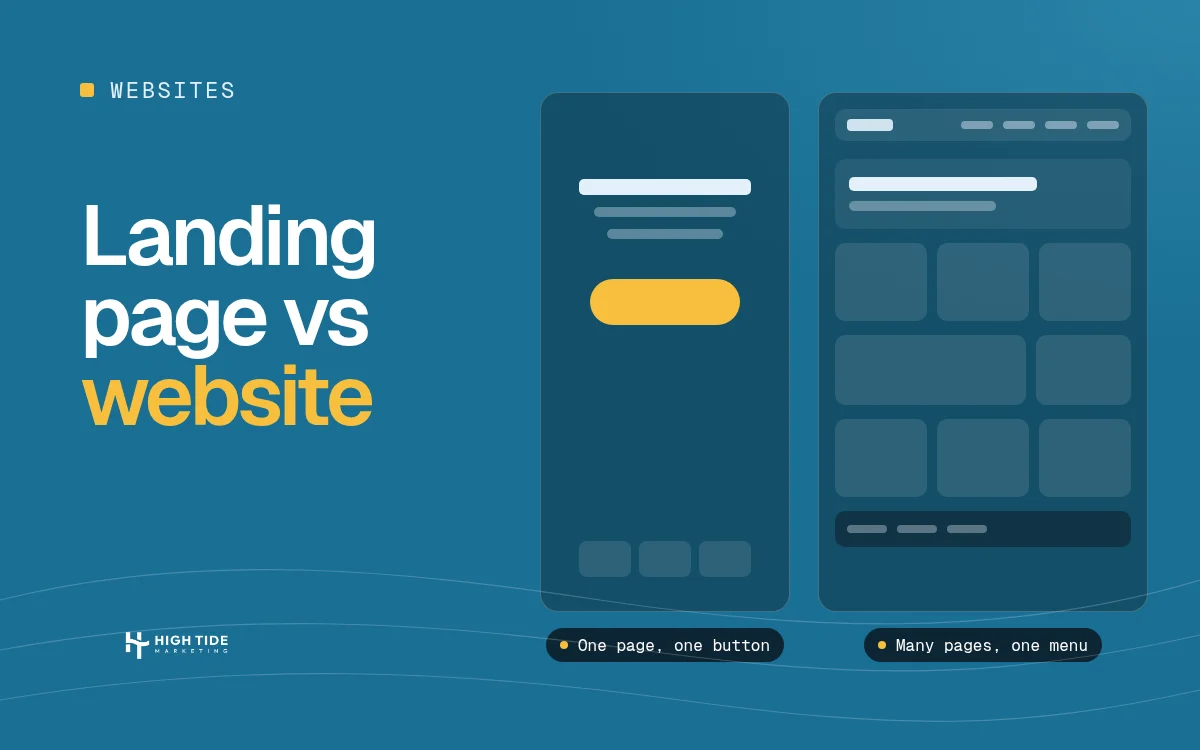
The difference between a landing page and a website is focus: a landing page is a single page built to get one action from one audience, usually visitors from an ad or email, while a website is a set of pages that explains your whole business and serves many visitors and goals. Most businesses need a website first, then add landing pages for specific campaigns. A landing page can live inside your website, and for a brand new business it can stand in for one for a while, but it won’t do the job of a full site for long.
I rechecked every sourced fact below on November 23, 2026.
What is a landing page?
A landing page is one page with one job. It has one offer, one call to action, and usually little or no navigation, so the visitor has nothing to click except the thing you want them to do. MailerLite defines it as a single web page created for a marketing or advertising campaign, where a visitor lands after clicking a link in an email, an ad or similar. Wix calls it a standalone web page with one primary focus, known as a call to action, built to eliminate distractions.
Google Ads uses the term more literally: the landing page is the webpage where people end up after they click your ad. Keep that in mind for the homepage section.
Think of the offer, not the design. MailerLite’s examples are signing up for a newsletter, registering for a webinar, downloading an ebook, or making a purchase. For a local business, that might be a free estimate request or a consultation booking.
As for “landing page vs web page”: every page on your site is a web page. A landing page is one with a campaign job and one audience.
What is a website?
A website is a collection of interconnected web pages under a single domain name. It has several pages, a menu, and room for detail: services, about, contact, reviews, a blog. MailerLite says websites are designed to be explored, and that they support your online presence and SEO efforts.
Landing page vs website: what are the key differences?
| Landing page | Website | |
|---|---|---|
| Goal | One specific action | Explain the business and serve many goals |
| Number of pages | One | Many |
| Navigation | Minimal or none | Full menu and footer |
| Audience | One audience at a time | Many types of visitors |
| Traffic source | Usually ads, email or social posts | Search, direct visits, referrals and more |
| Content depth | Short and focused | Broad, with room for detail |
| SEO role | Usually campaign focused | Ranks for many topics over time |
| How success is measured | Conversion rate on the one action | Traffic, leads, trust and overall results |
This table is my summary. The sources I checked (MailerLite and Wix) agree on the core split: one goal and one call to action on a landing page, exploration across a website. The traffic and SEO rows are patterns, not rules. A landing page can be indexed and found in search, as I explain below.
Landing page vs homepage: what’s the difference?
Your homepage is the front door for everyone. It has to speak to a first-time visitor, a returning customer and someone comparing you with a competitor, so it points in several directions. A landing page speaks to one target audience about one offer.
That’s why I’d rarely send paid traffic to a homepage. Someone who clicked an ad for a specific service has to hunt for it. Google’s advice for advertisers points the same way. In Google Ads Help, landing page experience is one of the three components of Quality Score, and it measures how relevant and useful your landing page is to people who click your ad. Google’s advice for improving it: give people what they’re looking for, and keep messaging consistent from ad to landing page. Google’s example: an ad for “flannel shirts” should land on a page featuring flannel shirts. Its Ads glossary adds that landing page experience reflects things like how useful and relevant the page is, how easy it is to navigate, the number of links on the page, and what people expect based on the ad they clicked.
Two limits. First, Google says Quality Score is a diagnostic tool and not an input in the ad auction, so don’t treat it as a lever by itself. Second, a landing page doesn’t have to be a stripped-down separate page. Under Google’s definition it’s just the page the ad sends people to. A specific service page on your website can work if it matches the ad and has one clear next step. The homepage rarely does.
A quick message-match test: put the ad next to the page. Does the headline answer what the ad promised, and is the next step obvious?
When should you use a landing page?
Use one for marketing campaigns with a specific audience and a specific ask:
- Paid ads. Each ad group can send people to a page that matches it. See how we run paid ads.
- A single offer or event. A free estimate, a consultation, a seasonal promotion.
- A lead magnet. A guide or checklist offered in exchange for an email address, which makes it a lead generation page.
- A test. Trying a new service, or a new city, before you build it into the full site.
Unbounce’s advice on conversion is to strip down to the essentials, use a strong, clear call to action, and add social proof like testimonials and reviews. Unbounce sells landing page software, so read that as vendor advice, not proof for any single tactic.
On benchmarks: Unbounce’s Conversion Benchmark Report analyzed 41,000 landing pages and 464 million visitors in Q4 2024 and found a median conversion rate of about 6.6% across industries (page updated March 4, 2025). It calls 10% or higher “good” in general, and says what counts as good varies by industry and offer. Treat 6.6% as a rough baseline, not a promise. The data is from Q4 2024, so it’s nearly two years old, and a “conversion” can mean very different things from one page to the next.
If you’re running ads to a B2C audience, I talk about where landing pages fit in how to market a B2C business.
When do you need a full website?
You need a website when people look for you, not only when they click your ad:
- To be found on Google. One page targeting one offer rarely covers the range of searches your customers use.
- To build trust. A single page has little room for reviews, services, and who you are.
- To explain more than one thing. Each service or location needs its own page.
- For your Google Business Profile. Google lets you share your business’s website on your profile, and a real website gives people a better place to land from your listing than a one-offer page.
- To keep working after a campaign ends. A landing page is often tied to a promotion. A website stays.
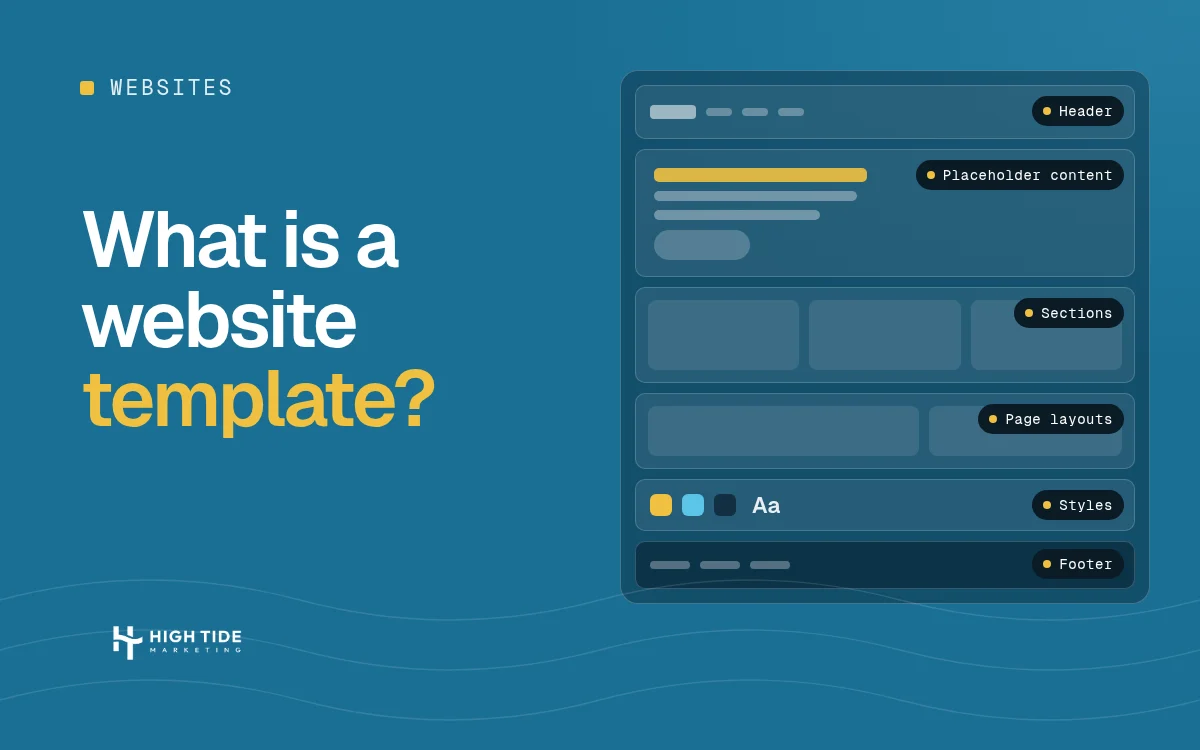
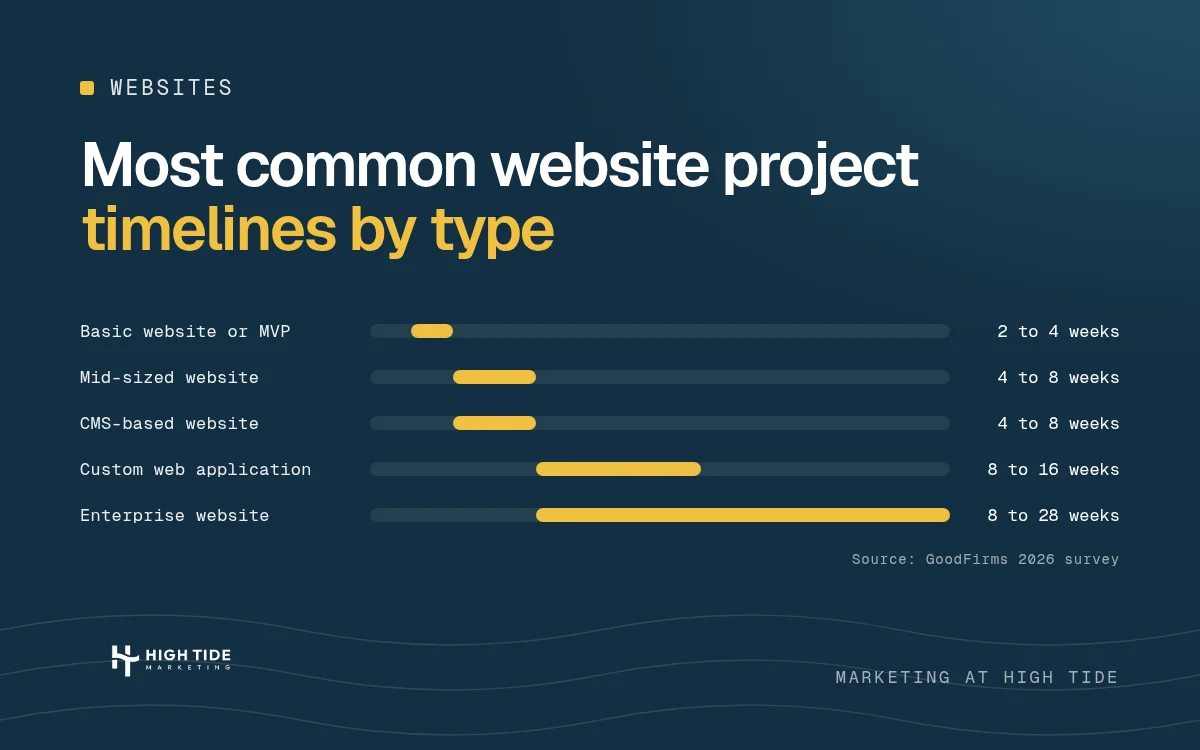
How you build it is a separate decision: website builder vs custom website, custom website vs template and what a website template is. For timing, see how long it takes to build a website, for budget what a custom website costs, and for our approach how we build websites.
Do I need a website if I have a landing page?
Usually, yes, though not on day one. That’s my opinion, not a surveyed fact.
Wix says a landing page can work as a website if you only need a single page to promote a product, service or offer, and that you can have a landing page without a website. A brand new business with one offer and one referral source can start there. Even so, Wix’s own guide says most businesses use both: the website as the foundation and landing pages for ads, launches and offers.
What you give up: showing up for many searches, room for proof, and a place for anyone who hears your name and looks you up. Plan to build the site next. If all your leads come from one page, you depend on one source of traffic.
Can a landing page be part of your website?
Yes. Wix says you can use the same domain for both, with paths like “yourbusiness.com/landing-page”. That also fits Google Ads, whose policy is that your landing page and display URL must share the same domain.
Two decisions to make:
- Navigation. Keep the page off your main menu, so campaign visitors don’t wander off.
- Indexing. If the page only exists for one campaign, you can tell Google not to index it. Google says that when it finds a noindex rule, it will drop the page from Google Search results entirely. If you want the page to be found in search, leave it indexable and make sure it has useful content. SEO-friendly website design covers the basics.
Frequently asked questions
Is a landing page good for SEO?
It can be, if search engines can index it and the page has something useful to say. Many landing pages are thin, though, so I wouldn’t count on one to rank. A website with many helpful pages gives you far more to rank with.
Is a homepage a landing page?
Under Google Ads’ definition, any page an ad sends people to is a landing page, homepage included. In marketing, the term usually means a page built for one campaign and one action.
Can a landing page rank on Google?
Yes, if it’s indexable and useful. If it has a noindex rule, Google will drop it from search results.
Is a Wix or Canva site a landing page?
That depends on the page, not the tool. A single page that pushes one action is a landing page. A multi-page site is a website. I haven’t checked what Wix or Canva say about their own tools, so I’m making no claim about either.
How many landing pages should a business have?
I couldn’t find a reliable number. My rule: one for each offer or audience you’re actively promoting, and no more than you can keep matched to your ads. Wix says a website can have as many landing pages as you need.
What’s a microsite vs a landing page?
This is my plain definition, since I didn’t find a standard one: a microsite is a small separate site with a few pages, often for one campaign or brand. A landing page is one page. I’d use a microsite only when a campaign needs multiple pages and its own look.
Which one do you need?
If you’re not sure whether you need a landing page, a full website, or both, book a discovery call. We work with dozens of clients across different industries, and we’re veteran owned. Pricing gets covered on that call, once we know what you need.