


A custom website is worth it when your site needs to bring in new customers, and the extra leads it produces are worth more than the extra cost. That’s usually true for established service businesses in competitive markets, businesses with several services or locations, and brands that need to look premium. It usually isn’t worth it for a brand-new business with a small budget, or one that gets nearly all its work from referrals.
We build custom websites, so you should know where we stand. I’d still rather you spend wisely than spend with us. Below is a simple way to run the numbers, what the research says about speed, search and trust, and the cases where a template is the smarter buy.
The short answer: when a custom website is worth it
| Situation | Custom website | Template |
|---|---|---|
| New business testing an idea | Usually overkill | Usually the right call |
| Mostly referral business, site only confirms you’re real | Hard to justify | A good template works |
| Need to win customers from Google in a competitive market | Usually worth it | Often limiting |
| Several services or locations, each needing its own page | Usually worth it | Gets messy fast |
| Premium brand where trust drives the sale | Usually worth it | Can look generic |
| Need booking, intake, CRM or other integrations | Often worth it | Depends on the platform |
| Current theme keeps failing speed tests | Often worth it | Hard to fix inside a heavy theme |
If most of your answers land in the first two rows, save your money for now. If several land lower in the table, keep reading.
How to calculate whether a custom website pays off
You don’t need a complicated model. You need four numbers you probably already know.
- Monthly website visitors who could become customers
- Conversion rate, the share of visitors who call, book or fill out a form
- Close rate, the share of those leads that become customers
- Customer value, the profit from an average customer (use lifetime value if customers come back)
The formula is simple:
Leads x close rate x customer value = revenue from the website
Then compare two versions of that formula, your current site and a better one.
A worked example
Here’s a hypothetical example for a law firm. These are made-up numbers to show the method, not results from a client.
| Current site | Improved site | |
|---|---|---|
| Monthly visitors | 1,000 | 1,000 |
| Conversion rate | 1.5% | 2.5% |
| Leads per month | 15 | 25 |
| Close rate | 20% | 20% |
| New clients per month | 3 | 5 |
| Profit per client | $3,000 | $3,000 |
| Monthly profit from the site | $9,000 | $15,000 |
Two more clients a month is $6,000 in added monthly profit. A $15,000 custom build would pay for itself in under three months. Traffic usually grows too when the site is planned around search, but the math works without counting on that.
Now run it with your numbers, and be conservative. If your customers are worth $300 and you’d only add one a month, a custom site may take years to pay back, and a template plus better Google Business Profile work could be the smarter move.
If you’re not sure what a custom build would cost for your business, our guide to custom website cost has sourced price ranges.
Speed and Core Web Vitals
Speed is one of the clearest places where how a site is built affects revenue.
In the Milliseconds Make Millions study, Deloitte analyzed mobile site data from 37 brands with Google. A 0.1 second improvement in mobile site speed was associated with an 8.4% increase in retail conversions and a 10.1% increase in travel conversions. Lead generation sites saw an 8.3% improvement in bounce rate on information pages.
Earlier Google and SOASTA research found that as mobile page load time goes from one second to 10 seconds, the probability of a visitor bouncing increases 123%.
Real tests back this up. Vodafone ran an A/B test on a landing page where the only change was speed optimization. According to the web.dev case study, a 31% improvement in Largest Contentful Paint led to 8% more sales.
Google measures user experience with Core Web Vitals. A good score means the main content loads within 2.5 seconds, the page responds to taps in under 200 milliseconds, and the layout doesn’t jump around as it loads.
Does a custom site guarantee better speed?
No. Platform matters less than how the site is built. The HTTP Archive’s 2024 Web Almanac found that 73% of mobile Duda sites passed all three Core Web Vitals, along with 60% of Squarespace sites, 57% of Wix sites and 40% of WordPress sites. A tuned template can beat a sloppy custom build.
What custom gives you is control. A developer can ship only the code each page needs, instead of a theme loaded with sliders, animations and plugins for every possible use. That’s why we build lean.
SEO: what custom changes and what it doesn’t
Google doesn’t rank sites higher because they’re custom. Its page experience guidance says Core Web Vitals are used by its ranking systems, but good scores don’t guarantee top rankings. Relevant, helpful content still matters most.
Where custom helps is structure. When the site is planned from keyword and competitor research, you can:
- Give each service and location its own page, built for how people search
- Control headings, titles and internal links on every page
- Add the schema markup that fits your business
- Keep URLs clean and consistent
- Write content that answers the questions customers ask AI tools and search engines
Templates can do some of this. They tend to struggle when you need many service and location pages, unique layouts for each page type, or code that stays lean as the site grows. Our guide to SEO-friendly website design covers the decisions that matter most, and SEO for a new website covers what to do after launch.
Conversion: design built around how your customers decide
A template gives you a layout made for thousands of businesses. A custom site starts with what your customers need to see before they call.
That changes practical things:
- Which proof appears near the top of each service page
- Where the phone number, booking button and form sit on mobile
- How pricing, process and FAQs are presented for your specific services
- Which pages exist at all, based on what people search for
None of this requires custom code on its own. But it does require someone to plan pages around your business instead of fitting your business into a pre-made layout. That planning is most of what you pay for in a good custom build.
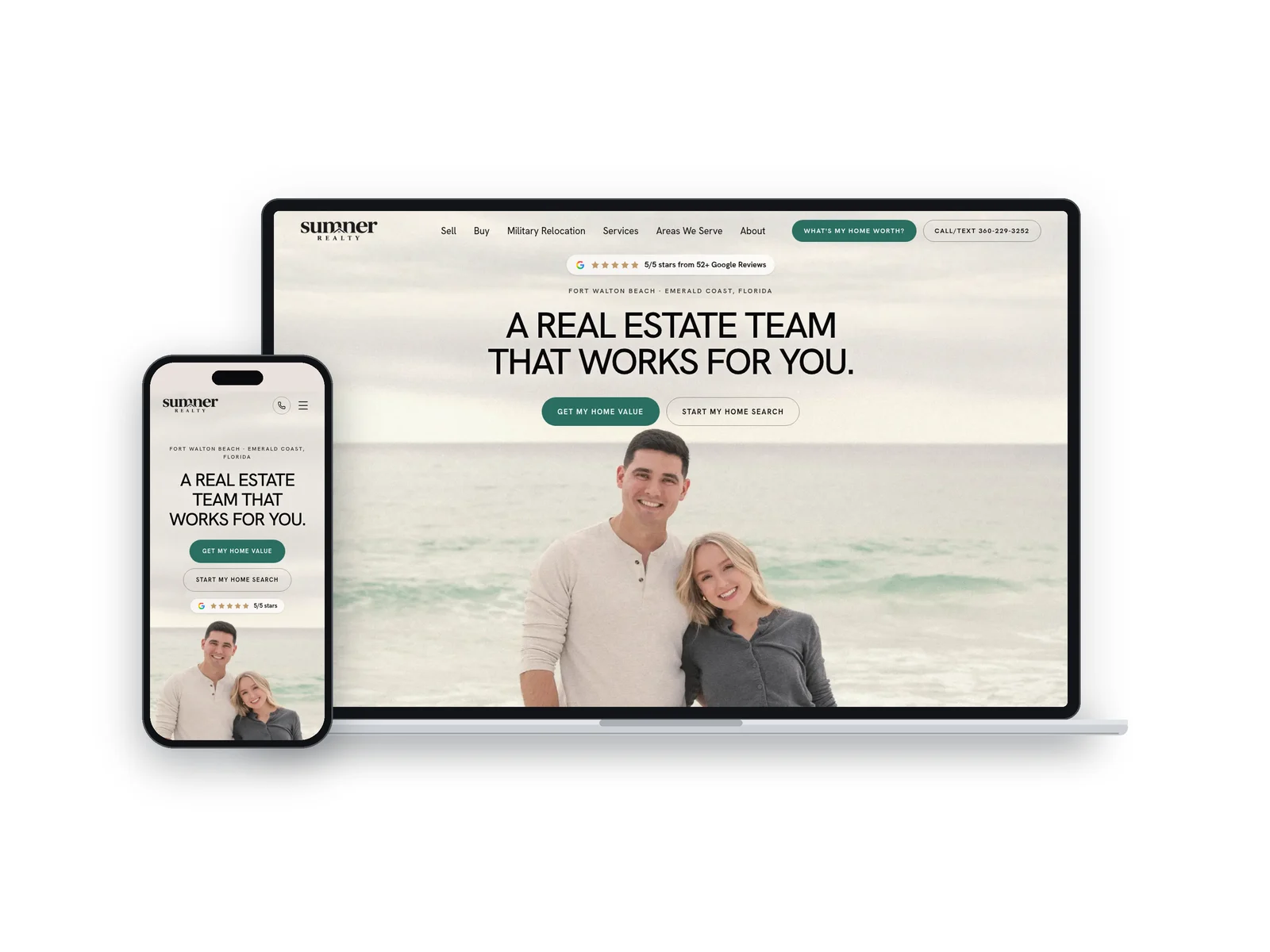
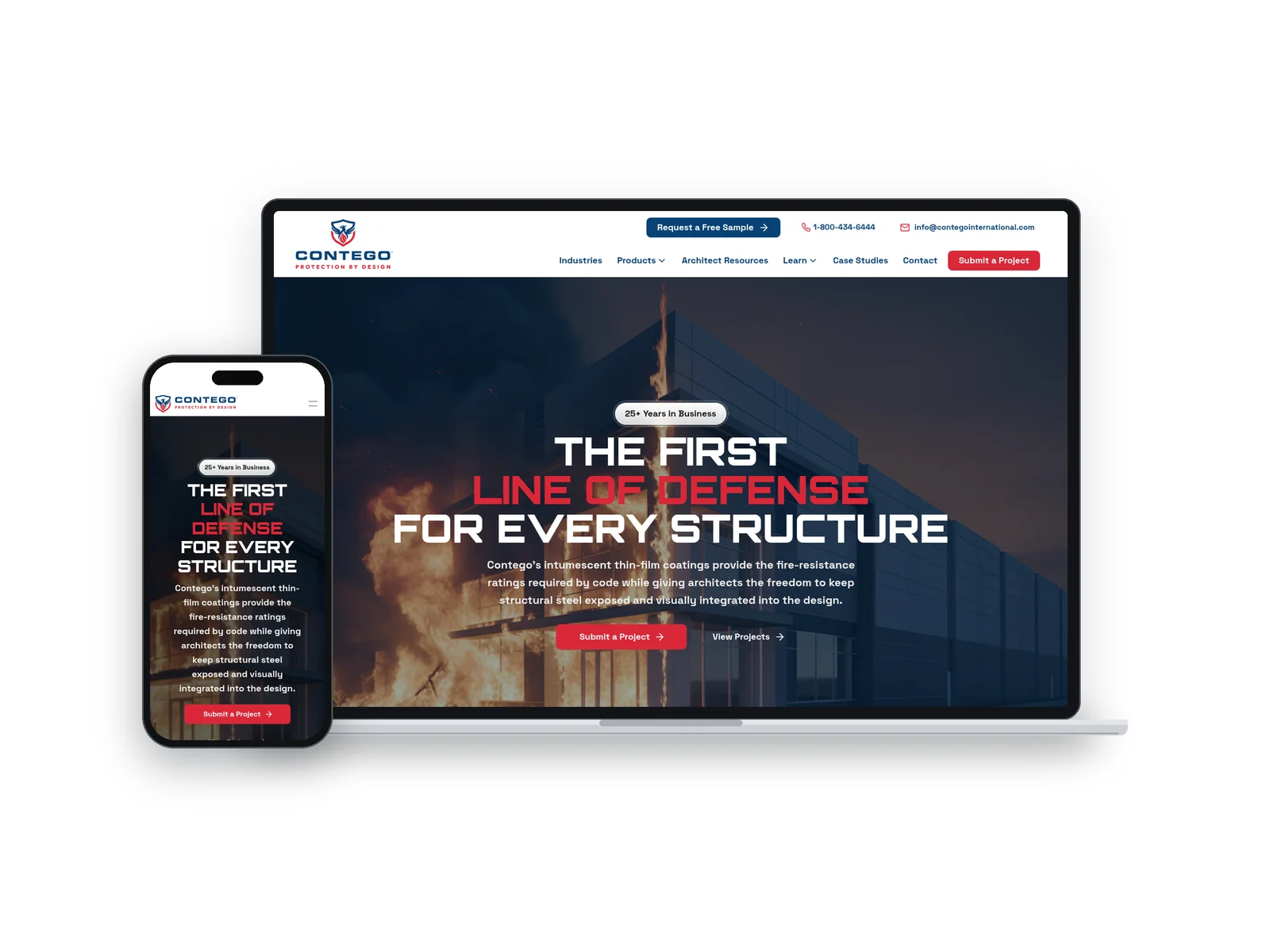
A custom website High Tide Marketing built for Sumner Homes, a home builder.
Brand trust and first impressions
People judge a business by its website, often faster than they read a word.
In a Stanford Persuasive Technology Lab study with Consumer WebWatch, 2,684 people compared the credibility of real websites. The site’s “design look” came up more than any other factor, in 46.1% of comments. That included layout, typography, images and color. For finance sites, the share rose to 54.6%.
That study is from 2002, and the web has changed a lot since. But the core finding holds up in everyday experience. When a home builder, med spa or law firm looks like every other site in its market, it’s harder to justify a premium price.
When a custom website isn’t worth it
Here’s where I’d tell you to hold off:
- You’re just starting out. Get a clean template live, collect reviews and learn what customers ask. Build custom once you know what sells.
- Nearly all your work comes from referrals. If people only visit to confirm you exist, a simple site does that job.
- You can’t keep up with demand already. More leads won’t help until you can serve them.
- Your budget would leave nothing for marketing. A great site with no traffic plan won’t do much. Our guide on how much a small business should spend on marketing helps you balance the two.
- You need it live this week. A template can launch in days. A custom site takes longer.
A middle path also works. Start with a template, then move to custom when the business grows. If you do, plan redirects so you keep any rankings you’ve built. Our comparison of custom websites vs templates covers that switch, and our guide on how to tell if a website is custom built helps you check what you have now.
How to protect your investment
If you decide custom is worth it, a few choices make the difference between a site that pays off and one that doesn’t:
- Start with research. Pages should be planned around real searches and competitor gaps.
- Ask for speed targets. Ask how the builder will measure Core Web Vitals before launch.
- Track leads from day one. Calls, forms and bookings should be measured by page and source, or you won’t know your return.
- Get ownership in writing. Know who owns the site, domain and content, and when.
- Plan for updates. A site that keeps improving after launch earns more than one left alone.
Our signs you need a new website checklist can also help you decide whether now is the right time.
Frequently asked questions
Is a custom website better than a template?
Not automatically. A custom site gives you more control over structure, speed, design and SEO, which matters in competitive markets. A well-chosen template is often the better buy for a new business with a small budget.
How do I know if a custom website will pay for itself?
Multiply leads by close rate by customer value for your current site and for a realistic improved site. If the difference covers the cost within a reasonable time, it’s likely worth it.
Do custom websites rank better on Google?
Not by default. Google ranks helpful, relevant pages with good page experience. Custom sites make it easier to plan pages around searches and keep them fast, which helps when the content is strong.
Do custom websites load faster?
They can, because developers include only the code each page needs. But a poorly built custom site can be slower than a well-tuned template, so ask for speed targets.
How much does a custom website cost?
Most small business custom sites fall between a few thousand dollars and $15,000 or more, depending on scope and who builds them. Our custom website cost guide breaks down the ranges.
Find out if custom makes sense for you
If you’re weighing whether a custom site is worth it for your business, book a discovery call. In 30 minutes, we’ll look at your current site, your competitors and your numbers, and give you an honest answer, even if that means a template for now. When custom is the right move, you work directly with me and my tight-knit team, and we make the process easy. Every site is custom, never templated, and SEO and AI SEO ready from day one. See how we build websites for service businesses.