

To market a B2C business, get specific about who your best customers are and what makes them choose you, then show up where they look: Google search and Maps, social feeds and their inbox. Give them a clear offer, make buying or booking easy, answer every inquiry fast and give customers reasons to come back and leave reviews. Most consumer businesses spend roughly 5% to 12% of revenue on marketing and judge results by customer acquisition cost, return on ad spend and lifetime value.
That’s the short version. I’m Chantz Yager, founder of High Tide Marketing. We work with local service businesses, consumer brands and retailers, and the businesses that grow fastest usually aren’t the ones with the biggest ad budgets. They’re the ones that know their customer, answer the phone and keep customers coming back. This guide covers how to build a B2C marketing strategy that does all three.
What is B2C marketing?
B2C (business-to-consumer) marketing is how a business attracts and keeps individual customers who buy for themselves or their household. That includes local service businesses like med spas, dentists, chiropractors, gyms, salons, landscapers and roofers, plus retailers, restaurants, ecommerce stores and consumer product brands.
Compared with selling to businesses, B2C marketing usually means:
- One decision maker, or a couple or family deciding together
- Shorter buying cycles, from minutes for a takeout order to a few weeks for a larger purchase
- More emotion and convenience in the decision, alongside price and quality
- Larger audiences, so reach, creative and reviews carry more weight
If you also sell to businesses, or you’re not sure which approach fits, our guide to the difference between B2B and B2C marketing lays the two side by side.
Step 1: Understand your customers and segments
Every good B2C marketing strategy starts with customer insight. Not demographics alone, but why people buy, what they worry about and what nearly sends them to a competitor.
You can learn a lot in a week without a research budget:
- Read your reviews and your competitors’ reviews. Look for the words people repeat. “Finally found a dentist who doesn’t rush me” tells you what to put in your headline.
- Talk to ten recent customers. Ask what was happening when they started looking, what else they considered and what made them choose you.
- Check your search terms. Google Search Console and your Google Ads search terms report show the exact words people type.
- Ask your front desk or sales team. The people answering calls know the top questions and objections.
Then group customers into a few segments you can actually market to differently.
| Segment by | Example for a med spa | Example for an online skincare brand |
|---|---|---|
| Need | First-time Botox vs. ongoing skin care | Acne care vs. anti-aging |
| Occasion | Before weddings, holidays and summer | Gifts, seasonal skin changes |
| Value | Members vs. one-time visitors | Subscribers vs. single orders |
| Location | Within 15 minutes of the office | Ships nationwide; test regional ads |
| Stage | Researching vs. ready to book | First-time visitor vs. repeat buyer |
Pick one or two segments to focus on first. Trying to speak to everyone at once usually means your ads and website say nothing in particular. We go deeper on this in our post on why marketing should start with the buyer.
Step 2: How much should a B2C business spend on marketing?
The two best-known surveys of marketing leaders land in a similar range. The CMO Survey’s 2026 report (Duke, Deloitte and the American Marketing Association) found companies spend 9.0% of revenue on marketing overall, with B2C services companies at 7.2%. Gartner’s 2026 CMO Spend Survey put the average at 7.8% for large companies.
Small businesses often need a higher percentage than those large-company averages, especially when they’re new, opening a location or competing in a crowded market. At High Tide, we use these bands:
| Goal | Share of revenue | Example at $1M revenue |
|---|---|---|
| Maintain | About 5% | $50,000 a year |
| Slow growth | About 7% | $70,000 a year |
| Fast growth | About 10% | $100,000 a year |
| Aggressive growth | 12% or more | $120,000+ a year |
Our full guide to how much a small business should spend on marketing explains how to pick your band. Or use our free marketing budget planner to build a 12-month budget from your own numbers.
Check your budget against cost per lead
Percentages give you a range. Cost per lead tells you whether that range can hit your goal. WordStream’s 2025 Google Ads benchmarks, based on 16,446 U.S. search campaigns, give a useful reference point. These are median costs per lead:
| Business category | Median cost per lead (Google Ads, 2025) |
|---|---|
| Restaurants and food | $30.27 |
| Shopping, collectibles and gifts | $47.94 |
| Personal services | $53.52 |
| Beauty and personal care | $60.34 |
| Health and fitness | $62.80 |
| Dentists and dental services | $83.93 |
| Home and home improvement | $90.92 |
| All industries | $70.11 |
Here’s how the math works, with made-up numbers for a med spa. If you want 40 new clients a month and 30% of leads book and show up, you need about 133 leads. At $60 per lead, that’s about $8,000 a month in lead costs. If a new client is worth $1,200 over their first year, those 40 clients produce $48,000 in first-year revenue. The plan works. If a client were worth $150, it wouldn’t, and you’d need a cheaper channel, a better close rate or a higher-value offer.
Balance brand building and promotions
Les Binet and Peter Field’s analysis of the IPA effectiveness databank, published by the LinkedIn B2B Institute in The 5 Principles of Growth in B2B Marketing, notes that in B2C, efficiency is typically maximized when about 60% of the communications budget goes to brand building and 40% to short-term sales activation. The right mix varies by category and business size.
For a small local business, you don’t need a TV campaign to build a brand. Short videos that show your team, community involvement, helpful social content and consistent creative all build the memory that makes people pick you later. Promotions and search ads then convert that memory into bookings.
Step 3: Choose your B2C channel mix
The best channel mix depends on how your customers find businesses like yours. A local med spa lives on Google Maps and Instagram. An ecommerce skincare brand lives on Meta ads, TikTok and email. Here’s how the main channels compare.
| Channel | Best for | Time to results | Watch out for |
|---|---|---|---|
| Google Business Profile and local SEO | Local businesses people search for nearby | 1 to 6 months | Incomplete profiles and few recent reviews |
| SEO | Capturing searches for your products or services | 4 to 12 months | Thin pages that don’t answer real questions |
| Google Ads | People ready to buy or book now | Days | Broad keywords and no call tracking |
| Meta (Facebook and Instagram) | Reaching local or national audiences by interest | Weeks | Creative fatigue; ads that look like ads |
| TikTok and short-form video | Discovery and brand awareness | Weeks to months | Inconsistent posting |
| Email and SMS | Repeat purchases, rebooking and promotions | Weeks | Messaging without consent |
| Reviews | Trust at the moment of decision | Ongoing | Asking only once in a while |
| Influencers and UGC | Borrowed trust and fresh creative | Weeks | Paying for reach with the wrong audience |
| Referrals | Low-cost, high-trust new customers | Ongoing | No system to ask for them |
Google Business Profile and local SEO
For local businesses, your Google Business Profile is often the first impression. BrightLocal’s 2025 Consumer Search Behavior study found that 45% of consumers default to Google for local searches, 15% go straight to Google Maps, and 67% often or always look at reviews after a local search.
That makes a few basics non-negotiable:
- Choose the right primary category and fill out every field
- Add real photos and videos of your location, team and work
- Keep hours, phone number and address consistent everywhere
- Post updates and offers regularly
- Ask every happy customer for a review and respond to all of them
Our guide on how to rank higher on Google Maps walks through the details, and our Google Business Profile management service handles it for you.
SEO
Beyond the map results, organic search captures people looking for what you sell: “best facial in Savannah,” “how long does a dental implant take,” “linen dresses for summer.” For local service businesses, that means a strong page for each service and each area you serve. For ecommerce, it means well-written category and product pages plus helpful guides. Our SEO services cover both.
Google Ads
Google Ads puts you at the top of the results when someone searches with intent. It’s the fastest way to fill a schedule or move inventory, and you can turn it up or down with demand. For local businesses, start with tightly themed campaigns around your main services and location, add call tracking and send each ad group to a matching landing page. For ecommerce, Shopping and Performance Max campaigns often carry much of the volume. Our paid ads team manages Google and Meta campaigns with this kind of tracking built in.
Meta, Instagram and TikTok
Social platforms are where consumers discover businesses they weren’t searching for. Pew Research Center’s 2025 survey of U.S. adults found that 84% use YouTube, 71% use Facebook, 50% use Instagram and 37% use TikTok, up from 21% for TikTok in 2021.
Paid social works well for:
- Local awareness, such as reaching people within a few miles of a new location
- Retargeting website visitors who didn’t book or buy
- Promotions tied to seasons and events
- Ecommerce prospecting, where Meta’s targeting finds new buyers who resemble your customers
Organic social builds trust and gives people a reason to remember you. You don’t need to be on every platform. Choose the one or two your customers actually use, and post consistently. If you’d rather hand it off, our social media marketing team plans, films and posts for you.
Short-form video
Short-form video is one of the main ways people now discover and size up consumer brands. HubSpot’s 2025 State of Marketing report found short-form video was the top-performing content format for both B2B and B2C brands in 2024, and marketers named it the format with the highest ROI (21%), ahead of images (19%) and live streams (16%).
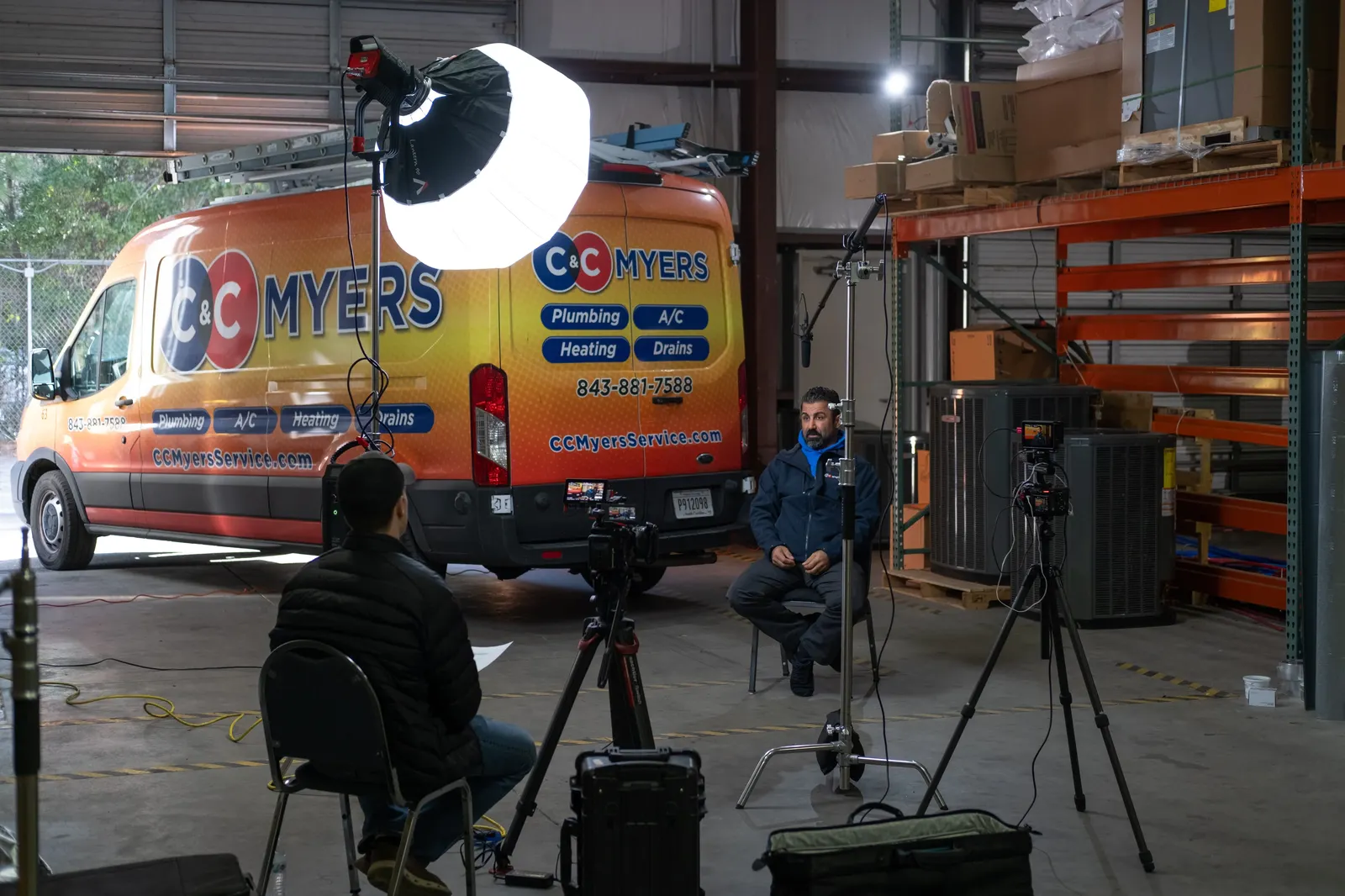
This is why High Tide is video-first. A 30-second clip of a stylist explaining a cut, a trainer showing a form fix or an owner walking through a new menu item builds more trust than any stock photo. Good short-form ideas for B2C businesses:
- Before-and-after transformations (where allowed in your industry)
- Answers to the questions customers ask most
- Behind-the-scenes looks at your team and process
- Customer stories and reactions
- Quick tips that show your expertise
Our video marketing services cover strategy, filming and editing.
Email and SMS
In HubSpot’s same report, B2C brands named email marketing their top channel for ROI in 2024, followed by paid social and content marketing. Email and SMS are also channels you own, so you aren’t renting attention from an algorithm.
Useful automated flows for consumer businesses:
- Welcome series for new subscribers or first-time customers
- Appointment reminders and rebooking prompts
- Abandoned cart emails for ecommerce
- Post-purchase or post-visit follow-ups asking for a review
- Win-back messages for customers who haven’t returned in a while
Only send marketing texts to people who gave you clear consent, and include opt-out instructions. SMS marketing has strict consent rules in the U.S., so set it up correctly from the start.
Reviews
Reviews are their own marketing channel for consumer businesses. We cover the numbers in Step 8 below, but the short version is that consumers read them, they want recent ones and they notice whether you respond.
Influencers and user-generated content
Influencer and creator partnerships work best when the creator’s audience matches your customers. For local businesses, that’s often a local creator with a few thousand engaged followers, not a national name. User-generated content (photos and videos from real customers) also makes some of the best ad creative, because it looks like the feed instead of an ad. Always get written permission before using customer content in ads.
Referrals
Word of mouth is often the cheapest way for a B2C business to win new customers. Make it a system instead of a hope: ask at the moment customers are happiest (right after a great result), give them an easy way to share and reward both sides with something meaningful.
Step 4: Creative and offers that make people act
The same budget can produce wildly different results depending on what you say and what you offer.
Lead with the customer’s outcome. “Look rested without looking done” lands better than “Botox special this week.” “Get your weekends back” beats “Lawn care services.”
Make a specific offer. Strong B2C offers reduce the risk of trying you:
- A first-visit package or new client special
- A free consultation or assessment
- A satisfaction guarantee
- A bundle or gift with purchase
- Free shipping thresholds for ecommerce
- Limited-time seasonal offers
Avoid the discount trap. Constant discounts train customers to wait for the next sale and attract bargain hunters who don’t come back. Use value-adds and first-visit offers more often than straight percentage-off deals.
Test creative constantly. On Meta and TikTok, creative is the targeting. Rotate new hooks, formats and angles every few weeks, keep what works and retire what doesn’t.
Step 5: Turn more visitors into customers on your website
Every channel above sends people to your website or landing page. If it’s slow, confusing or hard to use on a phone, you pay for the traffic and lose the sale.
For local service businesses, a converting website has:
- A clear headline that says what you do and where
- Click-to-call buttons and online booking above the fold on mobile
- Real photos of your team, location and work
- Reviews and before-and-after results near every call to action
- A page for each service with pricing guidance and FAQs
- Fast load times on mobile
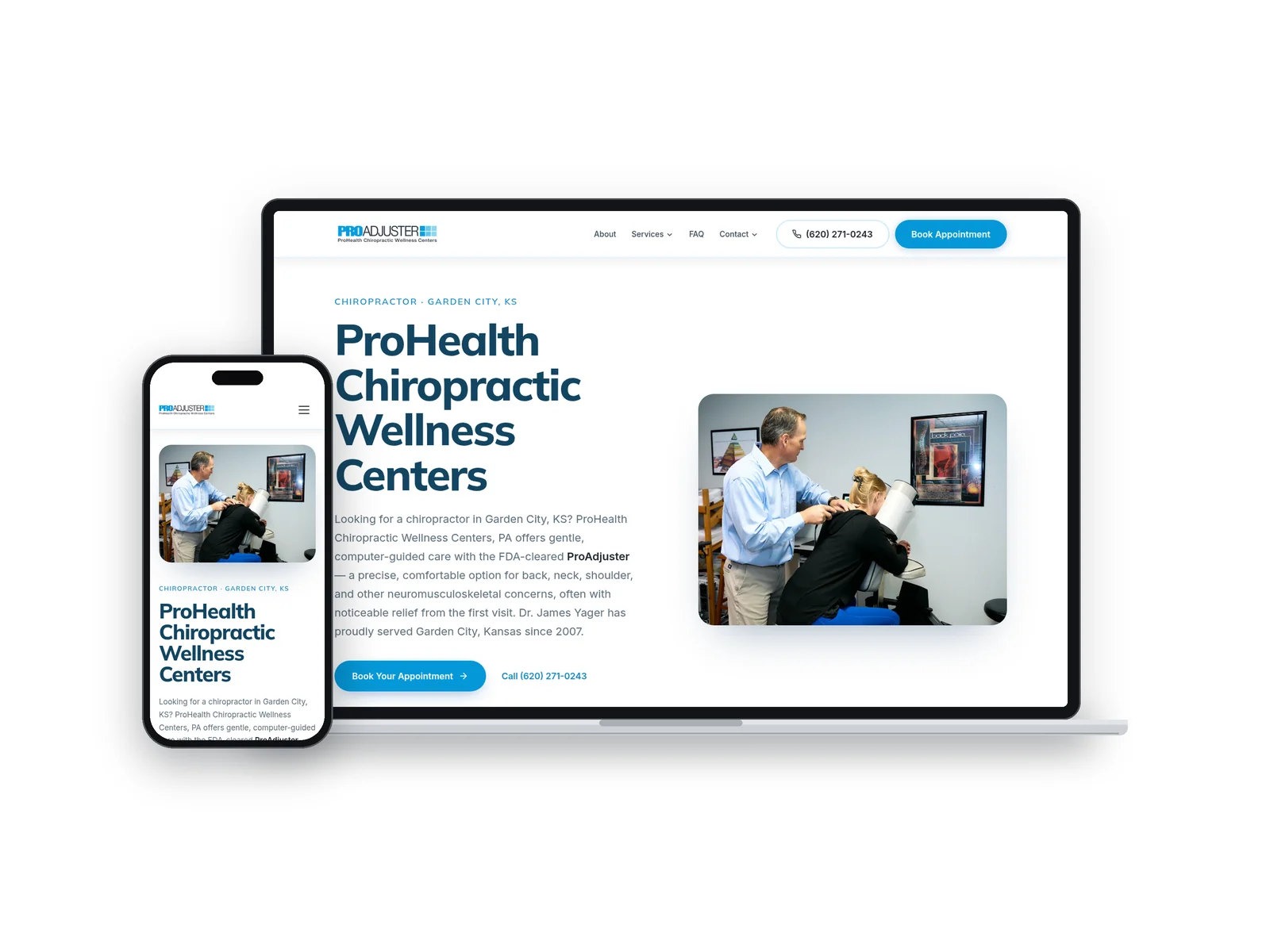
A custom website we built for ProHealth Chiropractic in Kansas.
For ecommerce, the checkout is where most money leaks. Baymard Institute’s running average of 50 studies puts the documented cart abandonment rate at 70.22%. You’ll never get that to zero, but you can lower it with guest checkout, clear shipping costs upfront, fewer form fields, trusted payment options and abandoned cart emails.
For paid campaigns, build dedicated landing pages instead of sending traffic to your homepage. One page, one offer, one call to action, with the ad’s promise repeated in the headline.
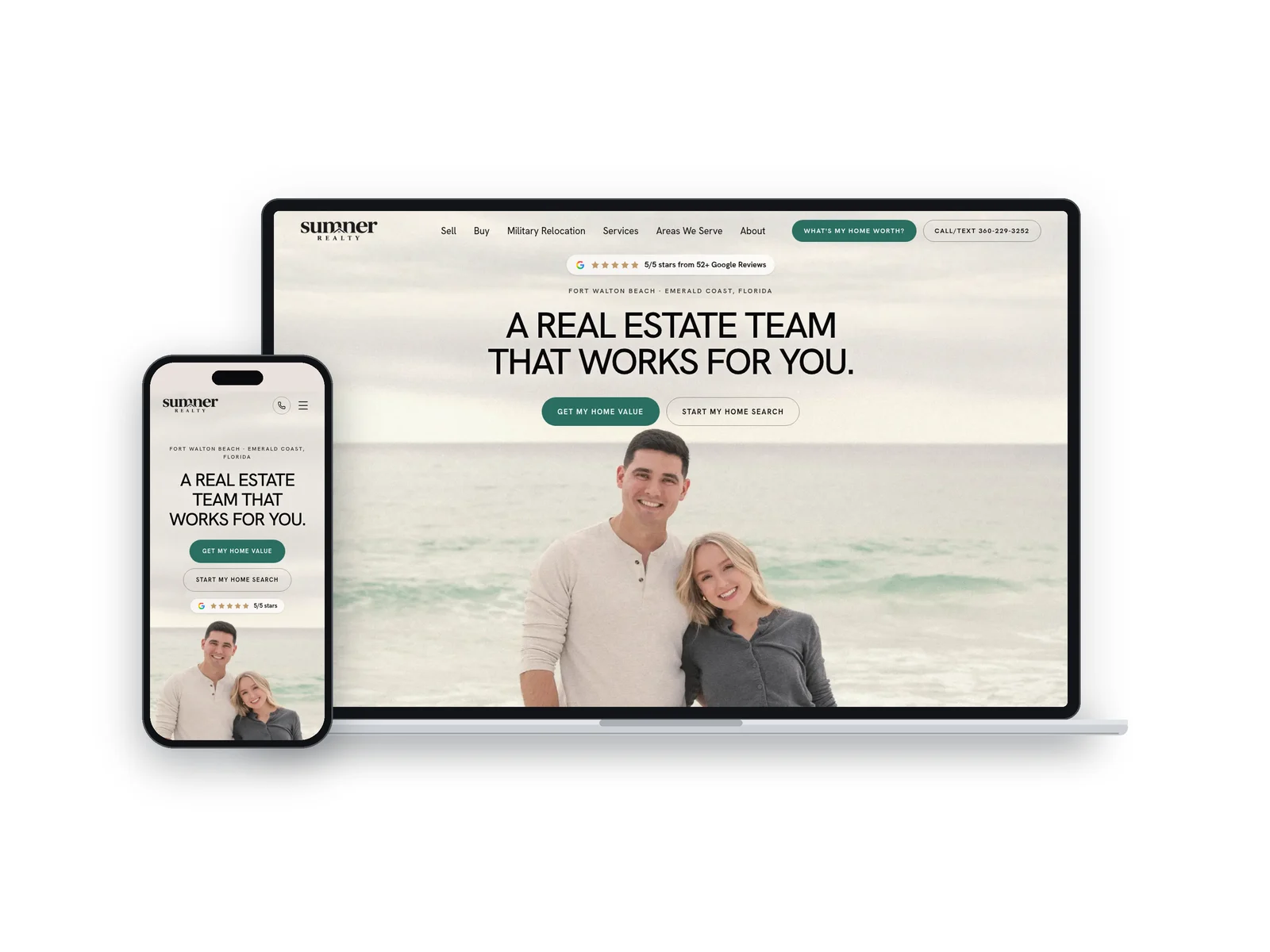
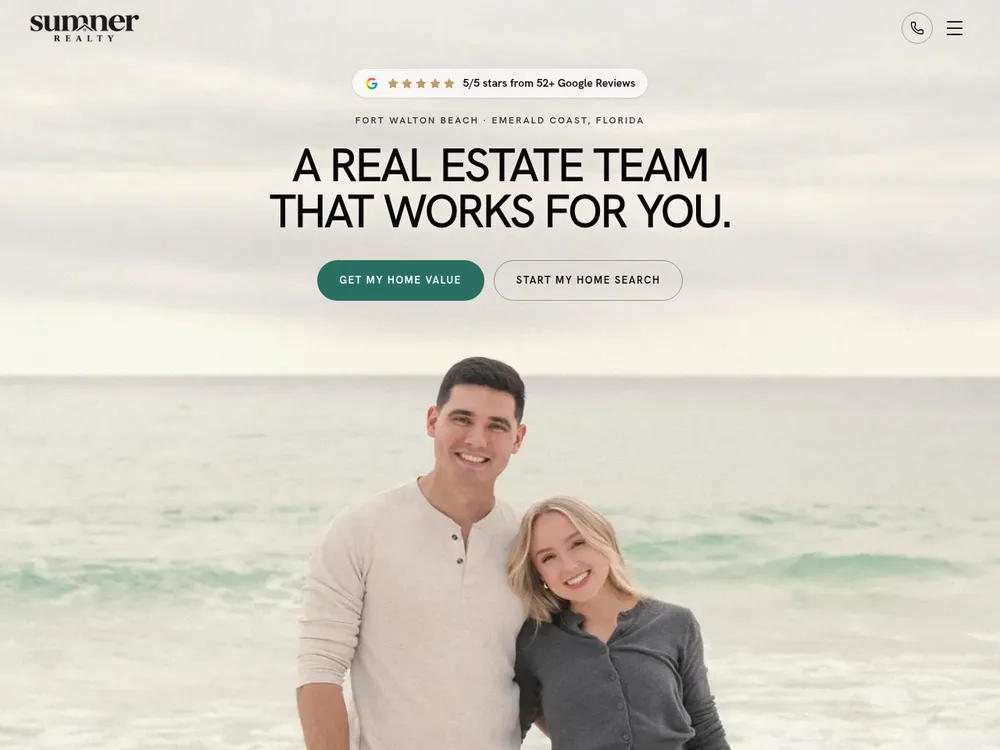
A custom website we built for Sumner Homes, a home builder.
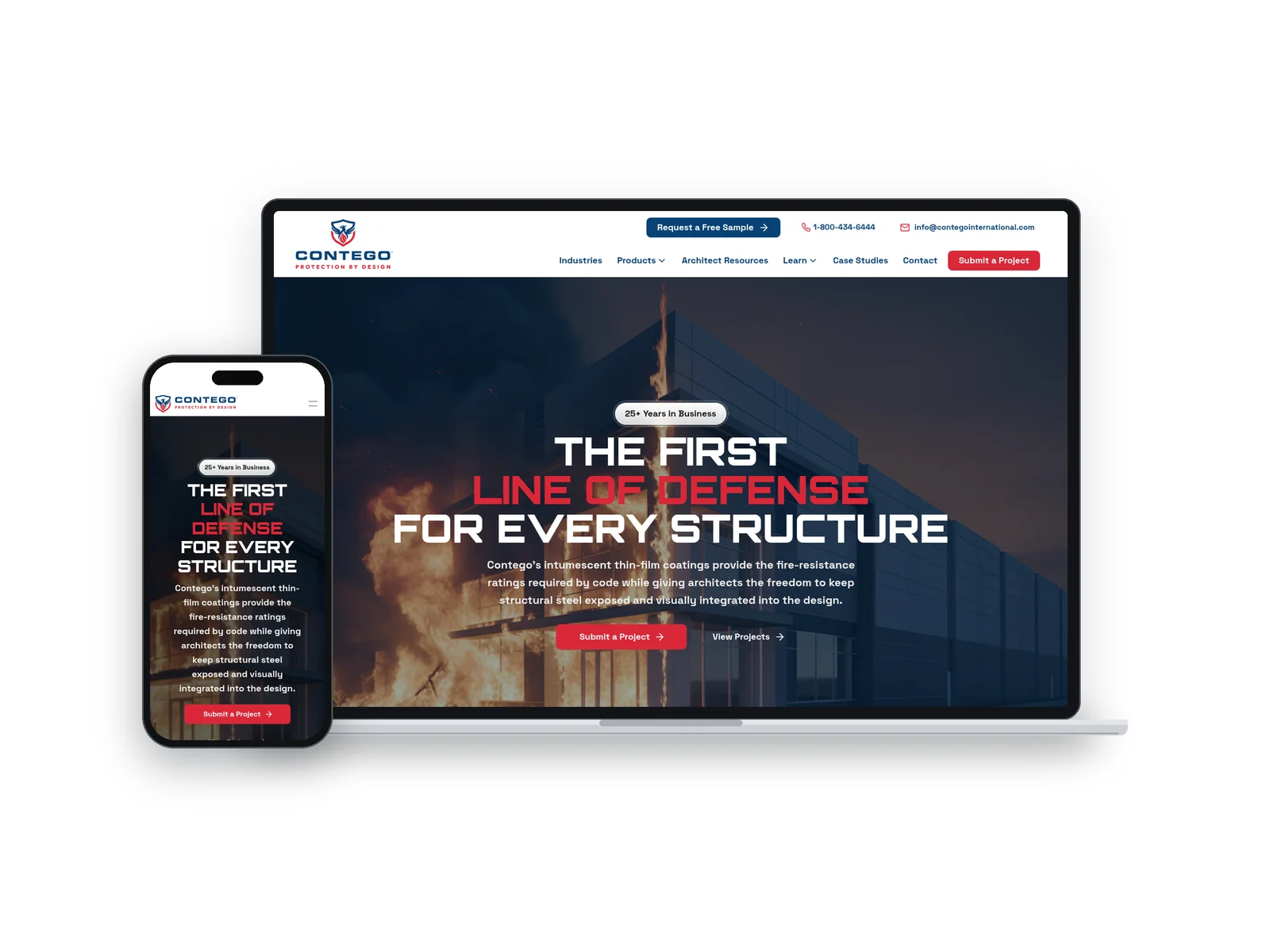
Every website we build at High Tide is custom, never templated, and SEO and AI SEO ready from day one. Managed website clients own their site after the first year. See our website design services for details.
Step 6: Follow up on every inquiry fast
This is the most overlooked part of B2C marketing. You can do everything above perfectly and still lose the customer because nobody called back.
The research is clear. In The Short Life of Online Sales Leads, published in Harvard Business Review, researchers studied 1.25 million leads from 29 B2C and 13 B2B companies. Companies that tried to reach a lead within an hour were nearly seven times as likely to qualify it as those that waited even one more hour, and more than 60 times as likely as those that waited 24 hours or more. In a separate test, the same team found the average response time to a web lead was 42 hours, and 23% of companies never responded at all.
When someone reaches out to several businesses at once, the first helpful response has the advantage.
Don’t let missed calls become missed customers
For many local businesses, the phone is still the main way new customers reach out. Every unanswered call during business hours, at lunch or after 5 p.m. is a lead that may call your competitor next. A few fixes:
- Track calls so you know how many come in and how many go unanswered
- Set up missed-call text-back, so callers get an immediate text (“Sorry we missed you, how can we help?”)
- Use an answering service or AI receptionist for after-hours and overflow calls
- Offer online booking so ready customers don’t need to call at all
- Review call recordings to coach staff on turning inquiries into appointments
A simple B2C follow-up cadence
| When | Action |
|---|---|
| Instantly | Automatic text or email confirming you got the inquiry, with a booking link |
| Within 5 to 15 minutes during business hours | Call or personal text from a real person |
| Same day | Second attempt if there’s no answer |
| Day 2 | Helpful follow-up with reviews, photos or a short video |
| Day 5 | Final check-in, with an easy way to book |
| After that | Add to your email list (with consent) for future offers |
Step 7: Grow retention and repeat purchases
Winning a customer once is expensive. Keeping them is where the profit is. Harvard Business Review’s The Value of Keeping the Right Customers notes that, depending on the study and industry, acquiring a new customer costs five to 25 times more than retaining an existing one, and cites Bain & Company research by Frederick Reichheld showing that increasing retention by 5% increases profits by 25% to 95%.
Marketers are noticing. The 2026 CMO Survey found that almost half of marketers are shifting their targeting toward increasing the loyalty of existing customers rather than pursuing new ones.
Ways to bring customers back:
- Rebook before they leave. Salons, dentists, chiropractors and med spas should schedule the next visit at checkout.
- Memberships and subscriptions. Monthly plans smooth out revenue and keep customers committed.
- Post-purchase flows. For ecommerce, send care tips, how-to content and replenishment reminders timed to when the product runs out.
- Loyalty perks. Simple rewards for repeat visits or referrals.
- Win-back campaigns. A personal note or offer for customers who haven’t returned in 90 days or more.
- Great service. No email sequence fixes a bad experience.
Step 8: Build reviews and reputation
For consumer businesses, reviews often decide who gets the call. BrightLocal’s 2026 Local Consumer Review Survey found that:
- 97% of consumers read reviews for local businesses
- 47% won’t use a business with fewer than 20 reviews
- 74% only care about reviews written in the last three months
- 89% expect business owners to respond to reviews
- 78% were asked to leave a review in the past year, and 83% of those asked went on to leave one
The takeaway: a steady stream of recent reviews matters more than a big pile of old ones, and asking works. Build review requests into your process, ideally a text or email with a direct link sent right after a great experience. Respond to every review, good or bad, with a personal reply. For tough ones, our guide on how to respond to negative reviews covers what to say and what to avoid.
Step 9: Measure CAC, ROAS and LTV
You can’t improve what you don’t track. These are the numbers that tell you whether your B2C marketing is working.
| Metric | What it tells you | How to calculate it |
|---|---|---|
| Cost per lead (CPL) | What each inquiry costs | Spend divided by leads |
| Lead-to-customer rate | How well you turn inquiries into sales | New customers divided by leads |
| Customer acquisition cost (CAC) | What it costs to win one customer | Total marketing spend divided by new customers |
| Return on ad spend (ROAS) | Revenue produced per ad dollar | Revenue from ads divided by ad spend |
| Average order or ticket value | What a typical purchase is worth | Revenue divided by number of orders or visits |
| Customer lifetime value (LTV) | What a customer is worth over time | Average order value times purchases per year times years retained |
| Repeat purchase rate | How often customers come back | Returning customers divided by total customers |
A quick example with made-up numbers: an online store spends $5,000 on Meta ads and gets $15,000 in tracked revenue, a 3x ROAS. That looks fine until you factor in a 40% gross margin, which means $6,000 in gross profit on $5,000 of ad spend. Thin. But if those customers buy three more times over the next year, their lifetime value changes the picture completely. Always judge ROAS alongside margin and LTV.
For local service businesses, connect calls, forms and bookings back to their source. Call tracking numbers, UTM tags on every link and a “How did you hear about us?” question at booking cover most of what you need.
A 90-day B2C marketing plan
Here’s how we’d sequence the first quarter for a consumer business starting fresh or resetting.
Days 1 to 30: Foundations
- Read your reviews and interview ten customers; pick one or two segments to focus on
- Set your budget band and target cost per lead or CAC
- Fully optimize your Google Business Profile
- Fix your website’s mobile speed, calls to action and booking or checkout
- Install call tracking, form tracking and ecommerce conversion tracking
- Set up missed-call text-back and a written follow-up process
- Start a review request process
Days 31 to 60: Launch
- Launch Google Ads on your highest-intent services or products
- Launch Meta or TikTok ads with three to five creative variations
- Film a batch of 10 to 15 short-form videos and start posting consistently
- Build welcome and post-purchase or post-visit email flows
- Create one strong first-visit or first-order offer
Days 61 to 90: Optimize and retain
- Review cost per lead, CAC and ROAS by channel and shift budget toward winners
- Refresh ad creative that’s fading
- Publish service, location or category pages for SEO
- Launch a referral or loyalty offer
- Add rebooking and win-back campaigns
- Set goals for the next quarter
Paid channels give you signal within weeks. SEO, organic social and reviews compound over months, so keep them running even when they look slow at first.
Common B2C marketing mistakes
- Boosting posts instead of running real campaigns. Boosts rarely have clear targeting, tracking or offers.
- Sending ad traffic to the homepage. Use landing pages built for the offer.
- Slow follow-up and missed calls. Paying for a lead and then letting it ring out is the most expensive mistake on this list.
- Ignoring existing customers. Repeat business and referrals cost a fraction of new customers.
- Asking for reviews only occasionally. Recency matters, so make it a habit.
- Judging ROAS without margin. Revenue isn’t profit.
If you’re running several channels at once, our post on giving every marketing channel a job helps you decide what each should be responsible for.
Frequently asked questions
What are the best B2C marketing strategies for small businesses?
Start with the basics that produce the fastest return: a complete Google Business Profile, a fast mobile website with easy booking or checkout, Google Ads for high-intent searches, steady short-form video and a system for reviews and fast follow-up. Then add email, SMS and paid social to grow repeat business and reach.
How much should a B2C business spend on marketing?
The 2026 CMO Survey found B2C services companies spend about 7.2% of revenue on marketing. Small businesses often spend 5% to 12% depending on growth goals, with new businesses and new locations at the higher end.
What is the best social media platform for B2C marketing?
It depends on your customers. Pew Research found Facebook and YouTube reach the most U.S. adults, Instagram reaches half and TikTok is growing fastest. Local service businesses often start with Facebook and Instagram, while consumer brands with younger buyers usually add TikTok.
How do I get more repeat customers?
Rebook at checkout, offer memberships or subscriptions, send post-visit or post-purchase emails, reward loyalty and referrals, and reach out personally to customers who haven’t returned in a few months.
How is B2C marketing different from B2B marketing?
B2C marketing usually targets individuals who decide quickly, so creative, convenience, reviews and offers carry more weight. B2B marketing targets buying committees with longer cycles. See our guide to how to market a B2B business for that side.
Grow your B2C business with High Tide
If you’d like help putting this plan to work, High Tide runs social media, video and paid ads for consumer businesses, built around a video-first approach that earns trust before the first visit. You’ll work directly with me and our tight-knit team, with more than 20 years of combined experience, and we keep things easy on your end.
Book a discovery call. In 30 minutes, we’ll look at your current marketing, your website and your competitors, and you’ll leave with a clear plan.