


To show up in ChatGPT, Perplexity and Google AI Mode, let their search crawlers reach your site, publish pages that answer real customer questions plainly, and build a consistent reputation across the web through reviews, listings and mentions on other sites. Nobody can force an AI assistant to name your business. What you can do is make your business the easiest, most trustworthy answer for it to find.
If you’ve wondered how to show up in ChatGPT, you’re asking at the right time. BrightLocal’s 2026 consumer research on AI and local search found that 45% of consumers used AI tools to find local business recommendations, up from 6% the year before. ChatGPT led at 31%, with Google’s AI Mode next at 23%.
Here’s how these tools find businesses, what you can control, and how to check where you stand.
How AI assistants find and cite businesses
Each assistant works a little differently, but they all need two things from you: access to your pages and enough evidence that your business is a good answer.
ChatGPT search uses a crawler called OAI-SearchBot. OpenAI’s crawler documentation says sites that opt out of OAI-SearchBot won’t be shown in ChatGPT search answers, apart from plain navigational links. A separate crawler, GPTBot, collects content for model training. The two settings are independent, so you can block training and still appear in search.
Perplexity uses PerplexityBot to surface and link websites in its answers. Its crawler page recommends allowing PerplexityBot in robots.txt and in your firewall if you want to appear. Perplexity shows its sources prominently, which makes it one of the easier places to see whether you’re being cited.
Google AI Overviews and AI Mode draw on Google’s own index. Google’s guide to AI features and your website says a page must be indexed and eligible to show a snippet in regular Search to appear as a supporting link, and that there are no extra technical requirements. Google also says AI Mode may run several related searches behind the scenes (it calls this “query fan-out”) to build one answer.
| Assistant | Crawler to allow | Where answers come from |
|---|---|---|
| ChatGPT search | OAI-SearchBot | OpenAI’s crawl plus other web sources |
| Perplexity | PerplexityBot | Perplexity’s crawl, with sources cited |
| Google AI Overviews and AI Mode | Googlebot | Google’s search index |
Why your reputation off your website matters
Your website is only part of the picture. Ahrefs studied 75,000 brands in a December 2025 analysis of AI visibility and found that branded web mentions correlated strongly with being named in ChatGPT, AI Mode and AI Overviews (0.66 to 0.71). Mentions on YouTube showed the strongest correlation of all, around 0.74. Total page count on a brand’s own site barely mattered.
Correlation isn’t causation, and Ahrefs says so. But the pattern makes sense. An AI model trusts a business more when many independent sources describe it the same way.
Reviews follow the same logic. In the same BrightLocal report, CEO Myles Anderson pointed out that tools like ChatGPT can’t see inside Google’s review system. If your reviews live only on Google, assistants outside Google have less to go on.
How to show up in ChatGPT and other AI tools in 8 steps
1. Let the right crawlers in
Check your robots.txt file (yoursite.com/robots.txt). If you want to appear in AI search, it should not block these user agents:
User-agent: OAI-SearchBot
Allow: /

User-agent: PerplexityBot
Allow: /

User-agent: Googlebot
Allow: /
Then check your hosting or firewall settings. Some security tools block unfamiliar bots by default, and robots.txt can’t fix that.
2. Confirm Google can index your key pages
If a page isn’t in Google’s index, it can’t appear in AI Overviews or AI Mode. Use the URL Inspection tool in Google Search Console on your homepage and main service pages. If something’s missing, our guide on why your website isn’t showing up on Google walks through the usual causes.
3. Write answer-first pages
AI tools pull answers from pages that state them clearly. Open each important page with two or three sentences that answer the main question, then back it up with detail.
A med spa page about Botox should say how long results usually last, who it’s for and what a first visit involves, right at the top. A law firm’s page should say which case types it handles, in which counties, and how consultations work. Vague lines like “we deliver excellence” give an AI model nothing to quote.
Build one page per core service and one per location you serve. Add a short FAQ section to each, written the way customers actually ask.
4. Keep your business facts identical everywhere
Your business name, address, phone number, hours and services should match across your website, Google Business Profile, Apple Maps, Yelp, Facebook and industry directories. Conflicting details make it harder for any system to trust what it finds. Our NAP consistency guide covers how to audit and fix this.
5. Earn reviews in more than one place
Keep building Google reviews, and add the platforms your customers use. For a dentist that might be Healthgrades. For a restaurant, Yelp and Tripadvisor. Reply to reviews with specifics, since the wording in reviews and replies is part of what describes your business. Here’s how to respond to negative reviews and get more of the good ones.
6. Get mentioned on other sites
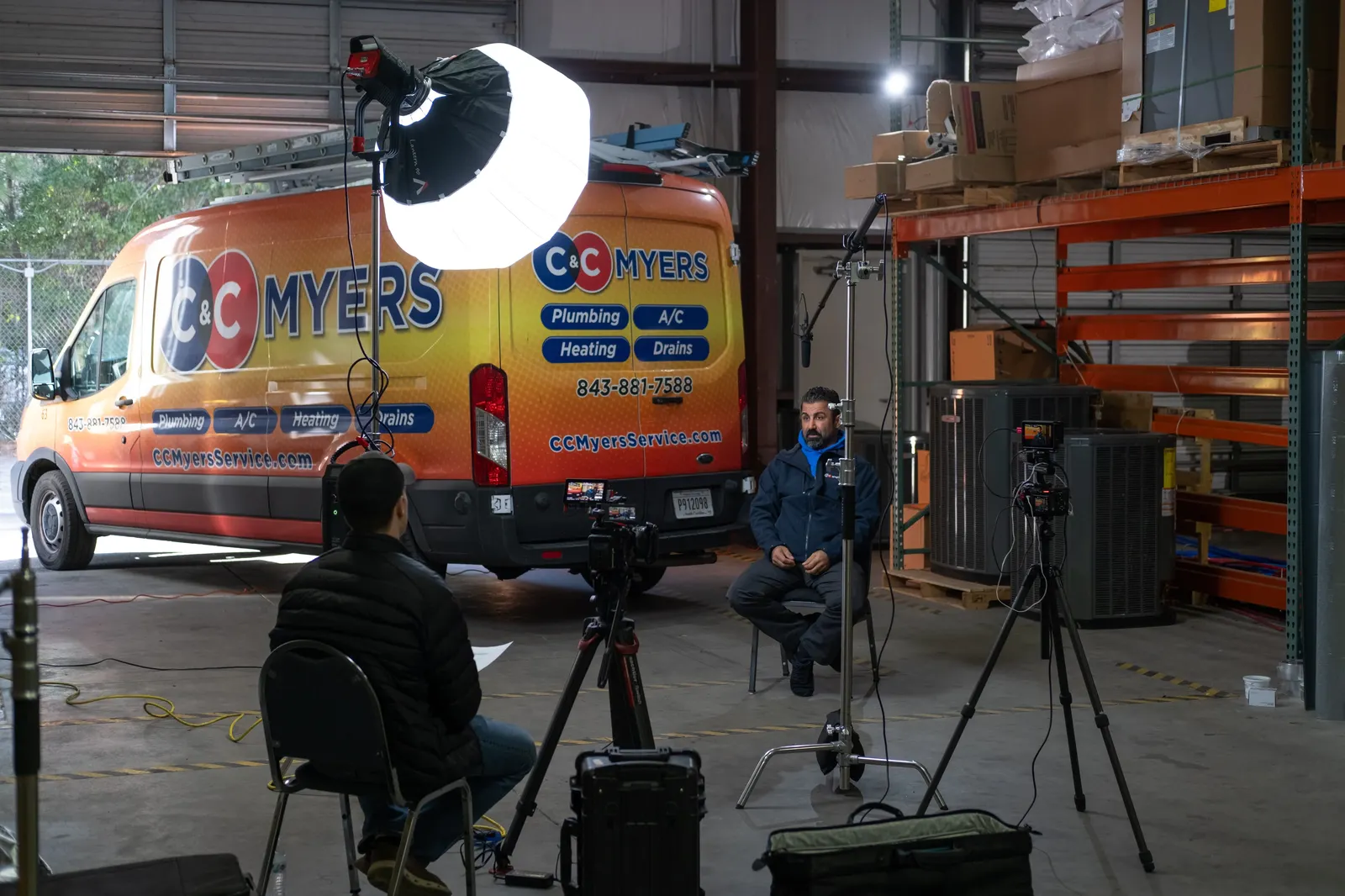
Look for honest, earned mentions: local news coverage, chamber of commerce listings, sponsor pages, industry associations, podcast interviews and guest articles. YouTube is worth real attention given the Ahrefs data. A chiropractor who posts short videos answering common patient questions builds mentions and trust at the same time. That’s one reason we take a video-first approach to marketing.
7. Add structured data that matches the page
Schema markup (such as LocalBusiness or Organization) states your name, address, hours and services in a format machines read easily. Google says no special schema is required for its AI features, but it does say structured data should match the visible text on the page. Treat schema as a way to remove ambiguity, not a shortcut.
8. Keep your Google Business Profile complete
Google’s AI features guide specifically tells site owners to keep Business Profile information up to date. For local searches in AI Mode, your profile’s categories, services, hours, photos and reviews are part of the raw material. If that’s an area you’d rather hand off, we handle Google Business Profile management for local businesses.
What’s different about Perplexity SEO and AI Mode SEO
Most of the work above applies everywhere. A few differences are worth knowing.
- Perplexity SEO rewards pages that are easy to cite. Specific facts, clear headings and a visible “last updated” date help a page get picked as a source. Perplexity also lists its sources openly, so you can see who it cites for your topics and learn from those pages.
- AI Mode SEO is mostly regular SEO done well. Because AI Mode fans out into several related searches, a page that covers the follow-up questions (cost, timing, who it’s for, what to expect) has more chances to be pulled in.
- ChatGPT depends heavily on what the wider web says about you. Third-party mentions and reviews tend to matter more there than any single tweak to your site.
How to check if you show up
You can run a simple audit in an afternoon.
- Write 10 to 20 prompts a customer might use, such as “best family dentist in Savannah” or “what should I ask a real estate agent before listing my home.”
- Run each prompt in ChatGPT, Perplexity and Google AI Mode, ideally logged out so your history doesn’t skew results.
- Record whether your business is named, whether your site is cited, and whether the details are correct.
- Note which competitors and sources appear instead. Those are the sites to study, or to get listed on.
- Check Google Analytics for referral traffic from chatgpt.com and perplexity.ai. In Search Console, AI Overviews and AI Mode traffic is counted inside your regular Web search data.
- Repeat monthly. Answers change often, so look at trends over several months, not one result.
If an assistant gets a fact wrong, trace it to the source. Usually it’s an outdated directory listing or an old page on your own site.
What no one can promise you
No agency, tool or consultant controls what an AI assistant says. Answers vary by wording, location, and even from one day to the next. Anyone promising guaranteed placement in ChatGPT is guessing.
What you can control is access, clarity and reputation. Those are the same things that drive good SEO, which is why we build AI search visibility into SEO work instead of selling it as something separate.
Frequently asked questions
Does blocking GPTBot keep my business out of ChatGPT?
No. OpenAI treats GPTBot (training) and OAI-SearchBot (search) as separate settings. You can block GPTBot and still allow OAI-SearchBot, which is the one that controls whether you appear in ChatGPT search answers.
Do I need an llms.txt file to show up in AI search?
Not for Google. Google says you don’t need new machine-readable files or AI text files to appear in AI Overviews or AI Mode. An llms.txt file won’t hurt, but crawler access, clear content and a strong reputation matter far more.
How long does it take to show up in AI answers?
Crawler changes register quickly. OpenAI and Perplexity both say robots.txt updates can take about 24 hours to take effect. Earning reviews and mentions takes months of steady work, so plan on a gradual build.
Is AI search replacing Google for local businesses?
Not yet. In BrightLocal’s 2026 research, AI tools ranked third for local recommendations, behind Google and Facebook. People are adding AI to their research, and most still check reviews before they choose.
Find out what AI tools say about your business
If you’d like a clear read on how ChatGPT, Perplexity and Google describe your business today, and what to fix first, book a discovery call. It’s a free 30-minute conversation with me and the team, and you’ll leave with specific next steps.