



SEO (search engine optimization) earns unpaid rankings in Google’s organic search results and takes months to build, while PPC (pay per click ads, like Google Ads) buys a spot at the top or bottom of the results page as soon as your ads are live and charges you for every click. Use PPC when you need leads this month or want to test which searches turn into customers. Use SEO to build a lead source that keeps working when you stop paying, and run both when you can afford to give each one a clear job.
I checked every sourced fact on November 24, 2026, and I mark where something is my opinion instead of evidence.
What is the difference between SEO and PPC?
It comes down to where you show up and how you pay.
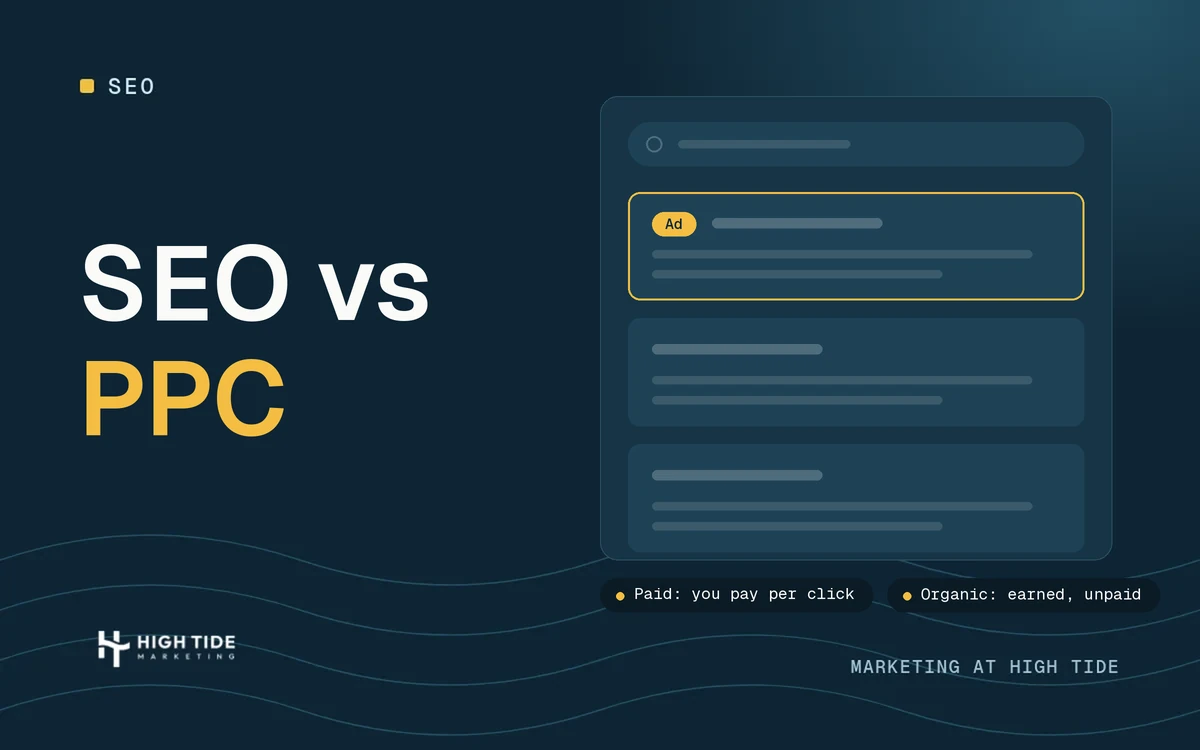
Google’s help center describes the search results page as two sections. Ads appear on the top or bottom of the page with an ad label, placed by relevance, your bid and a few other factors. The organic search results are unpaid links to websites, and your ad won’t show there.
- SEO (search engine optimization) is the work of making your site easier to find and more useful, so you earn organic rankings. There’s no cost to appear in organic results (Google, March 2023 article). That doesn’t make SEO free. Search Engine Land puts it plainly: organic search isn’t “free”, because the work takes time and money (page updated May 18, 2026).
- PPC (pay per click) is advertising where you pay when someone clicks. With Google Ads, you only pay when someone clicks your ad to visit your site or call your business.
One thing people get wrong: running ads does nothing for your organic rankings. Google says PPC won’t improve your organic search rankings. The two are separate systems.
SEO vs PPC: how do cost, speed and control compare?
| SEO | PPC | |
|---|---|---|
| How you pay | Time or a provider’s fee, not per click | A fee each time someone clicks your ad |
| Time to first leads | Months | Quickly, once ads are approved and live |
| When spending stops | Rankings can keep earning organic traffic | Ads stop showing, traffic stops |
| Control over message and targeting | Limited. Google decides what to show | High. You write the ad and choose the search terms, area and budget |
| Trust and click behavior | Organic results are not labeled as ads | Ads carry an “Ad” label |
| Best use | A steady lead source over time | Fast leads, promotions, testing searches |
This table is my summary. The sourced parts: Google says PPC lets you reach customers more immediately and customize a campaign on the fly, and you can tweak ads anytime to target a group or promote a deal. For SEO, Google’s starter guide says changes might take effect in a few hours, others could take several months (updated December 10, 2025).
I’m leaving ad cost numbers out. For SEO fees, see what SEO costs.
Which is better for a small business with a limited budget?
Neither wins the SEO vs PPC question by default. Google itself says the answer depends on your goals and suggests changing the question from “SEO vs. PPC” to “SEO and PPC.”
If you can only fund one, here’s the rule I’d use. It’s my judgment, not a research result. Answer four questions:
- Do you need leads in the next 30 days? If yes, ads are the only one of the two that can deliver that fast. SEO won’t.
- What is a new customer worth to you? Each click costs money whether or not the visitor buys. If a customer is worth a lot, ads can pay. If not, clicks are hard to justify. Google advises you to measure conversions, like purchases, sign-ups or phone calls, so you can see your return on investment instead of guessing.
- Do enough people search for what you sell? This is where basic keyword research comes in. Google points advertisers to Keyword Planner to find higher-volume keywords. If almost nobody searches for your service, neither SEO nor search ads will have much to work with.
- How crowded is your area? In the ad auction, the competitiveness of the auction is one of six factors that decide where your ad shows. A crowded market makes both channels slower or costlier (my read).
How I’d read the answers: need leads now, a customer worth real money, and tracking in place, start with ads. Longer runway and a market where you can realistically rank, start with SEO. Unsure and short on budget, pick one job for the first 90 days and measure it instead of splitting a small budget across both.
Is Google Ads worth it for a small business?
It can be, but only if you can tie spending to results. Ads give you control: Google says you decide how much you’re comfortable spending and set your budget accordingly. Control over ad spend is different from a return on ad spend.
When PPC campaigns pay:
- You have a specific offer and a page that matches it. Google rates landing page experience, meaning how relevant and useful your page is to people who click, as one of the three components of Quality Score. Google also says higher quality ads can often lead to lower costs per click.
- You track calls and form fills. Google Ads can count phone calls from ads and from your site as conversions.
- Someone picks up the phone. A paid click that rings out is money gone.
When paid ads burn money (my read, not a study):
- Visitors land on a homepage and have to hunt for what they clicked on.
- Nobody checks which searches triggered the ads. Google’s search terms report shows the searches that triggered your ads and how they performed, and lets you add irrelevant ones as negative keywords.
For a local service business there’s a second option. Google’s Local Services Ads use a pay-per-lead model instead of pay-per-click, and don’t require a website (August 2025 article). They’re limited to specific countries and service categories, so check eligibility.
How long does SEO take compared with PPC?
PPC gives you immediate visibility as soon as the campaign is live. SEO doesn’t have a fixed timeline, and anyone who gives you one is guessing. Google says some changes take a few hours, others several months, and that no one can guarantee a #1 ranking (page updated June 5, 2026).
For a rough shape, Backlinko’s SEO pricing survey (last updated December 29, 2025) lays out a general guide: the first 1 to 3 months are mostly strategy, auditing and foundational changes with minimal visible results, 4 to 12 months bring gradual gains, and traffic turns into revenue in the 12 to 24 month range. Backlinko’s caveat: 10 different websites will likely have very different timelines. See how long SEO takes.
Should you run SEO and PPC together?
If you can afford it, yes, and give each a job. Search Engine Land says SEO and PPC are complementary channels, and ideally you use both as long as your budget allows. Google’s own article ends the same way: invest in both for a well-rounded strategy.
Here’s the split I’d use. It’s a method, not a guarantee:
- Ads find the searches that turn into customers. Run a tight PPC campaign on the searches where the search intent is closest to buying. Use the search terms report and your conversion tracking to see which searches led to calls or forms.
- SEO goes after those same topics for the long term. Build or improve pages for the searches that converted, so you earn that organic traffic without paying for each click.
That’s the idea behind giving every marketing channel a job. For the broader budget question, see how much a small business should spend on marketing. If you want to know whether SEO is worth the investment first, read is SEO worth it for a small business.
What about SEO vs SEM?
SEM means search engine marketing. Search Engine Land calls it an umbrella term for the combination of SEO and PPC. So SEO and PPC are both parts of SEM: SEO is the organic side, and PPC is the paid search side. It also notes that people use SEM and PPC interchangeably, which it says isn’t officially correct.
Is SEO dead now that AI answers show up first?
No, though what “SEO” covers is shifting. Google’s documentation for site owners says the best practices for SEO remain relevant for AI features like AI Overviews and AI Mode, with no additional requirements to appear in them (updated December 10, 2025). It also says AI Overviews are only shown when its systems determine they add something beyond classic Search, and often don’t trigger.
Two caveats. That’s Google describing its own product, so it’s Google’s position, not a neutral study. And I haven’t verified any dataset on how AI answers change clicks, so I won’t give you a percentage. Watch your own numbers: AI features are counted in the overall search traffic in Search Console. For the AI side of this, see how to show up in ChatGPT.
Frequently asked questions
Is PPC more expensive than SEO?
Not a clean comparison. PPC charges per click while ads run. SEO costs time or a provider’s fee, and Search Engine Land notes it isn’t free. Cost per customer is the number that matters, and you only get it by tracking results.
Can PPC help SEO?
Not directly. Google says PPC won’t improve your organic rankings. What ads can do is show you which searches convert, which helps you decide what to build for SEO.
Should a new business start with SEO or Google Ads?
It depends on how fast you need leads. My opinion: a new site has nothing ranking yet, so ads are the quicker test. Start SEO alongside if you can, since it needs the longest head start.
Is Local Services Ads PPC?
Not by Google’s description. Local Services Ads use pay per lead, not pay per click. Google says you’re charged for valid leads, and leads determined to be invalid or low quality are not charged.
Do I need a landing page for PPC?
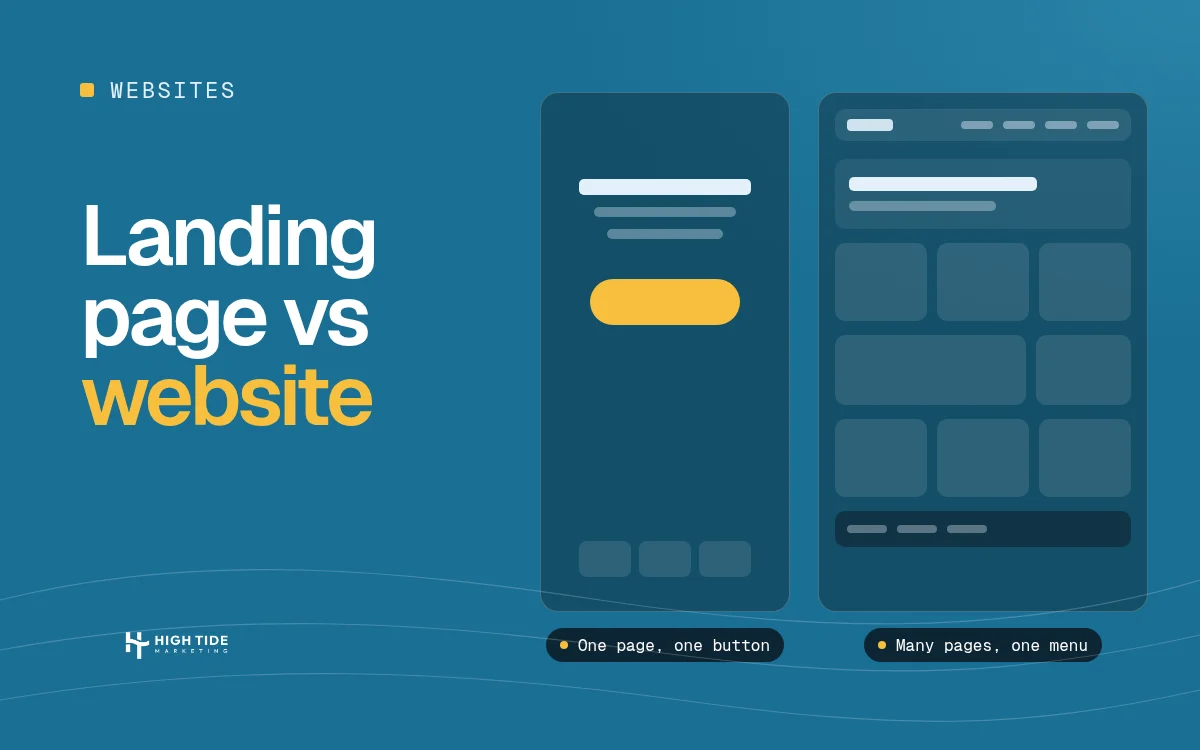
You need a page that matches the ad. Google lists landing page experience as one of the factors behind Quality Score. A specific service page can work as a landing page, and a homepage usually doesn’t match a specific ad. I break down when each one fits in landing page vs website.
Not sure which one to start with?
If you want a second opinion on where your first dollar should go, book a discovery call. You can also see how we handle SEO and how we run paid ads. We work with dozens of clients across different industries, and we’re veteran owned. Pricing gets covered on the call, once we know your market.